Mangana Gold Rush
Fingal Valley, Tasmania (1852–1858)
Aboriginal and Torres Strait Islander people are advised that this page may contain images and names of people who have died.
Date range
1852 – 1858
Discovery
February 1852
Discoverer
James Grant of Tullochgorum (credited)
Later Phase
Reef mining at Mangana and Mathinna from ~1858
Initial Rush
~200 diggers
Significance
First payable gold in Tasmania
Map: Mangana Gold Rush (-41.58, 147.78)
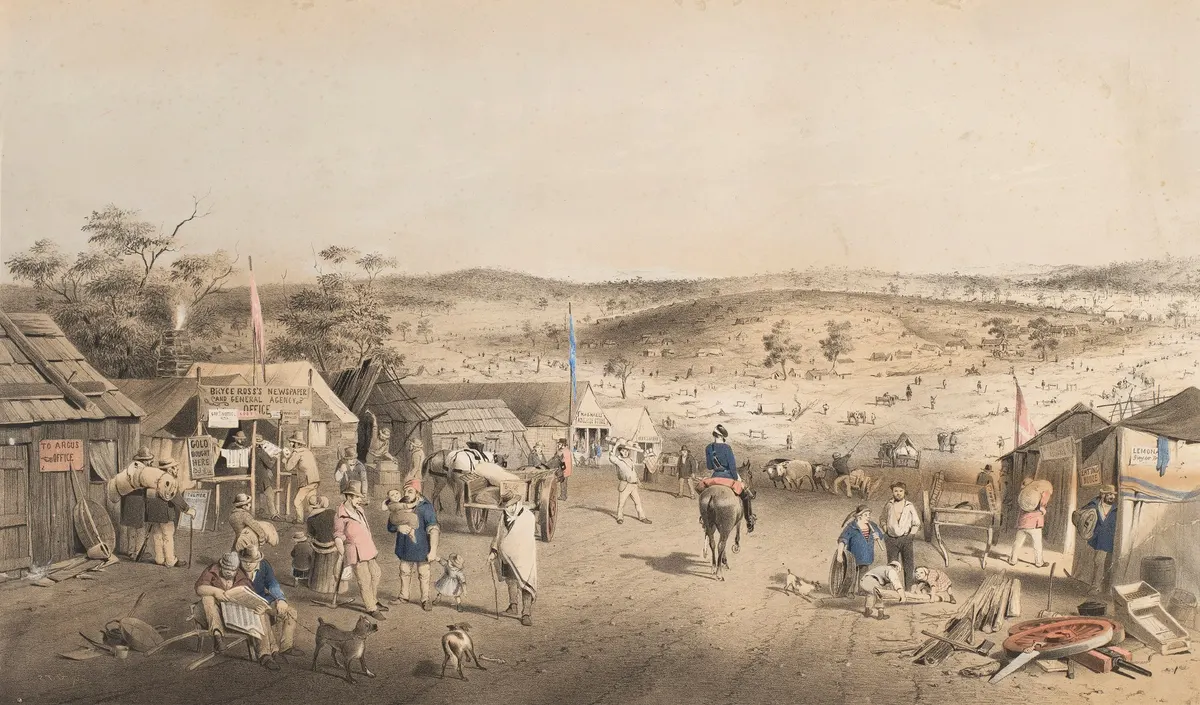
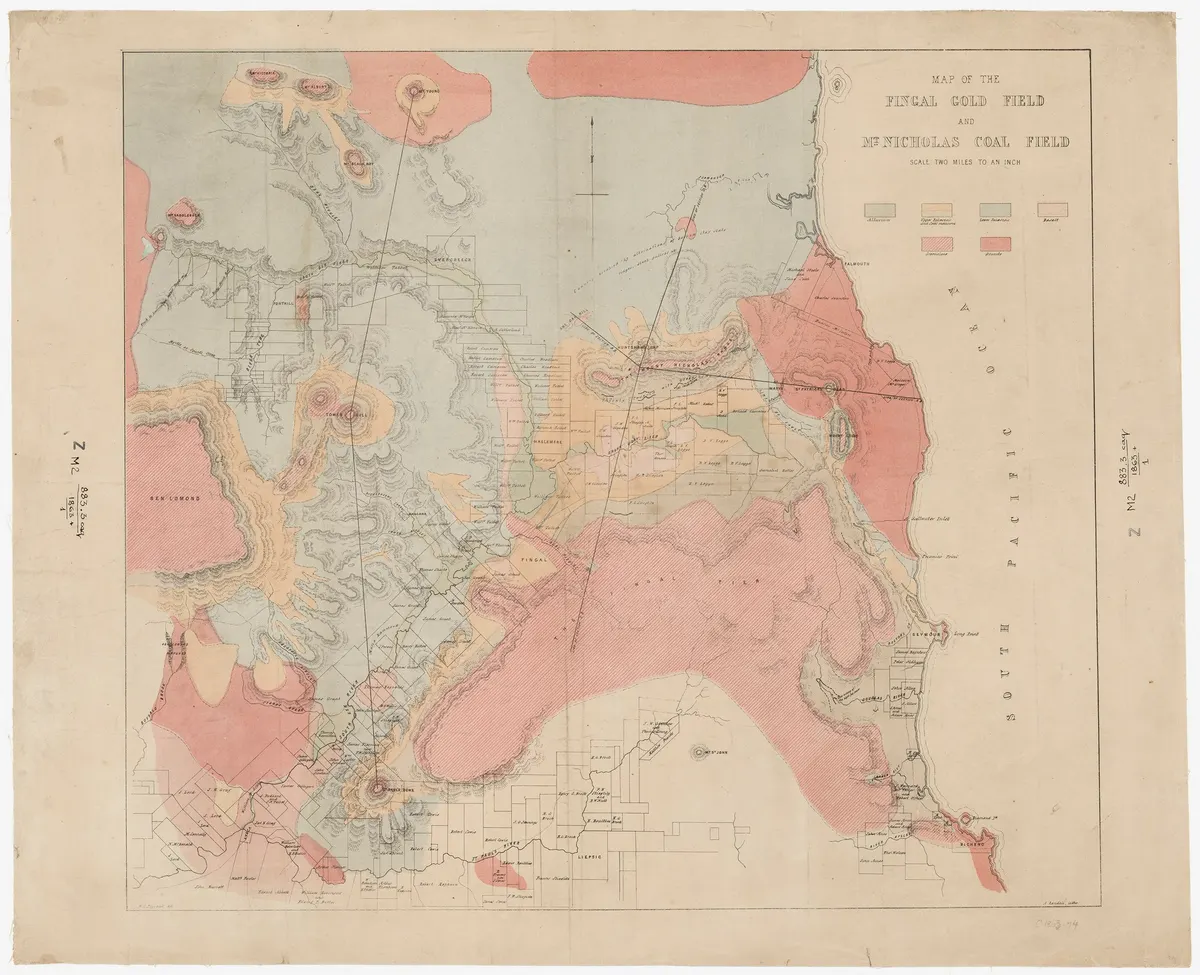
As Van Diemen's Land's workers streamed across Bass Strait to Victoria, the colonial government and Launceston businessmen wanted a local field to keep labour at home. In February 1852 payable alluvial gold was reported at Richardsons Creek near what became Mangana, in the Fingal district — officially the first payable gold in Tasmania. About two hundred diggers came, a modest rush by Victorian standards.
Around 1858 the field turned to reef mining, and the north-eastern "gold belt" through Mangana and Mathinna stayed productive for decades, peaking with the Golden Gate mine at Mathinna from 1887. Mangana is named for an Aboriginal man said to be the father of Truganini.
Timeline
Payable gold reported near Mangana
Reef mining begins at Mangana and Mathinna
Golden Gate mine opens at Mathinna
Notable Figures
Mangana was the start of a north-eastern gold belt that kept working for decades, and it remains best known as the site of Tasmania's first payable gold.